Generally the topic of death is largely invisible in our society. Dead people are transported off of hospitals only during the night, millions are spend on artificial teeth every year and old people take medication during family gatherings to temporarily overshadow the effect of “old people diseases” like Alzheimer's. Decay in general pains us and is masked out.
But even though we try to avoid death itself and we generally don't wish it on anybody, which useful things can we draw from considering death?
So let's talk about death.
Death & Culture
Death in our society is almost an unspeakable thing, but it doesn't have to be. In Mexico for example the Dìa de Muertos is a happy family gathering, where people think of their dead relatives in a colorful celebration.
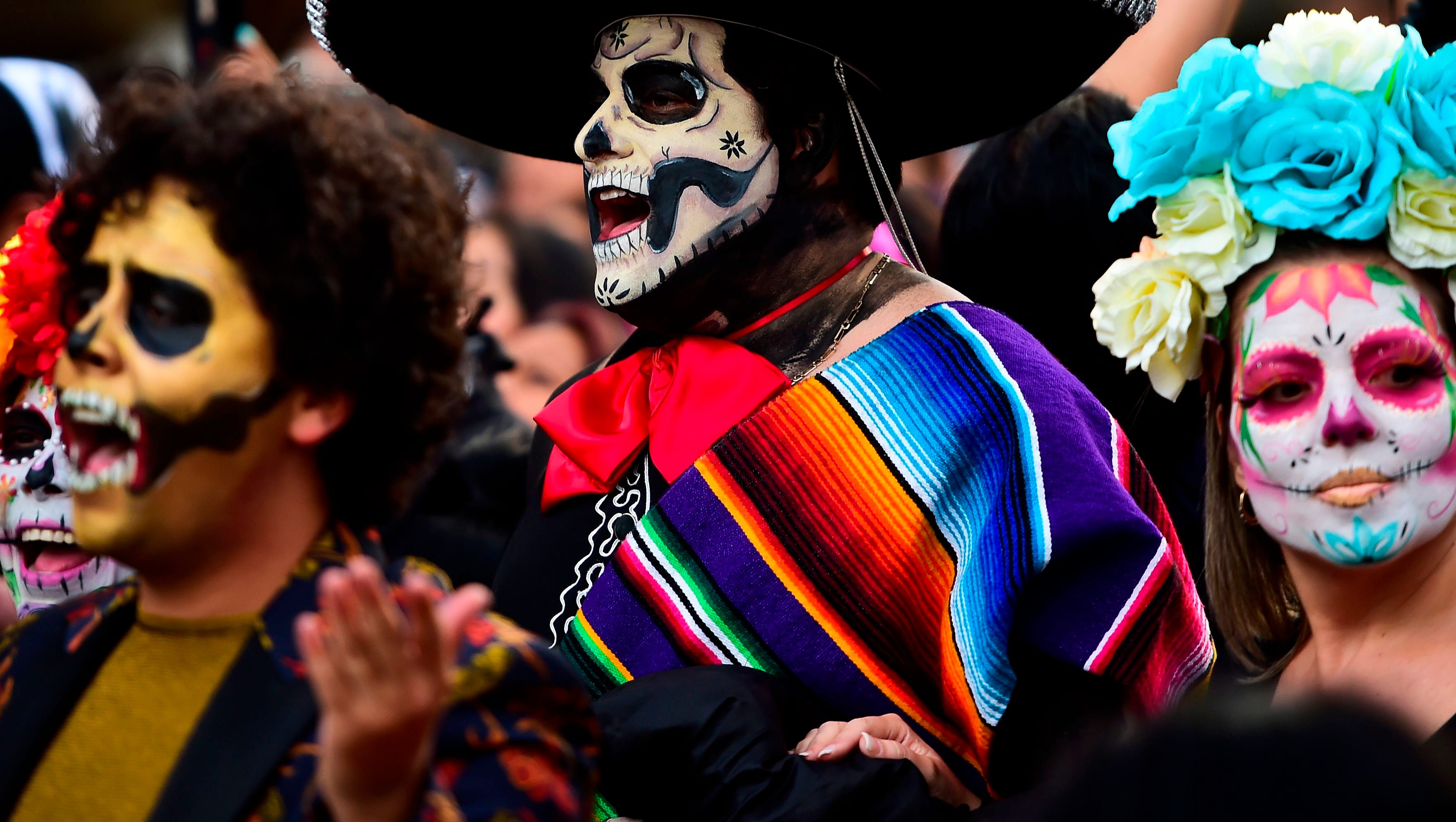
During this three day event people celebrate the memories of the dead and laugh in the face of death, rather than mourning or feeling down. For the big parade, everybody dresses up in skeleton paint to mask as Catrina, the Mexican representation of death. I find this a beautiful reminder, that everyone of us once will be one of the dead. Rather than keeping death in the back-alley of consciousness, on this day death is in everybody's face, literally.
Death & Clarity
Death is going to happen to everyone 100%. One of the few rules that knows no exception. At the moment of death, the whole social reality in which we live in and we maintain constantly, the goals we achieved and things we have gathered are going to be dismantled.
These things can be extremely beautiful and have a lot of meaning in our lives, but existentially they are something which is created by us. It lives with us, and dies with us.
This is something which is really felt by people when death approaches them. People get a clear view on the priorities of their lives. During “the daily wear and tear” we might feel lost, life feels mute, but when death approaches, life becomes much clearer.
It is this effect which is beautifully portrayed in the book Top 5 Regrets of the dying. A book in which the nurse Bronnie Ware summarizes the top 5 regrets she hears at her hospital.

It is this beauty and clarity which can be found in the contemplation about death, which is pointed towards through the expression Memento Mori.
To me its a matter of awareness and wisdom, to not consider death only when it's already too late, when the body is already on its way out the door, but to learn from the past and integrate these insights into our everyday life.
In the face of death, what living matters can really be serious? The most serious thing which could happen to you is arguably death, and it's going to happen to you 100%. So while we can make an elephant out of a fly, i.e. blowing a problem out of proportion, considering death has the opposite effect.
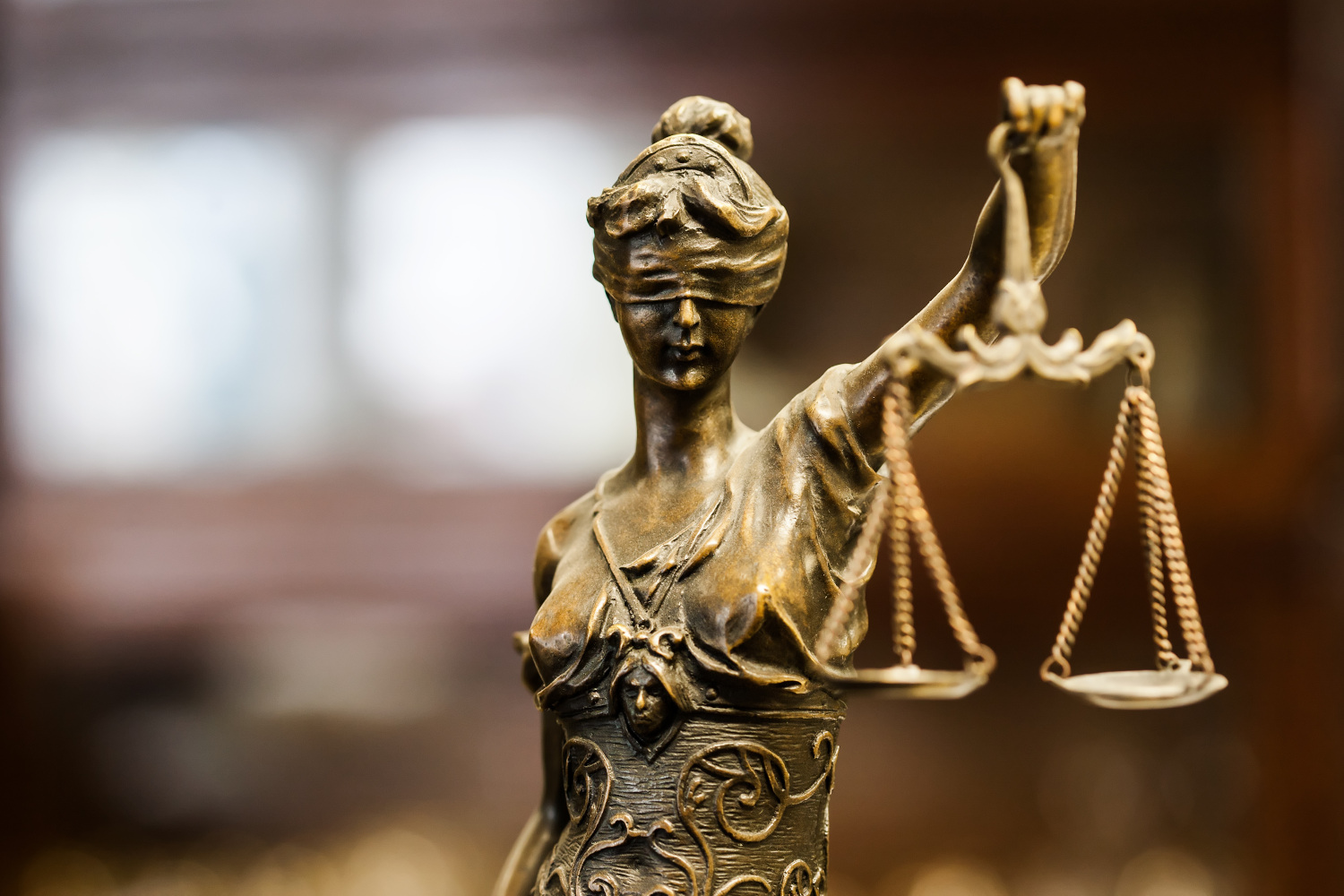
It is this consideration, which can turn a “huge problem” into a minor happening on the way of our life.
Death & Symbolism
Considering death can thereby have a humbling, beautifying and enhancing effect on our lifes. Things that seem big and horrible turn into minor happenings, and become part of the precious, fleeting moment, that is life.
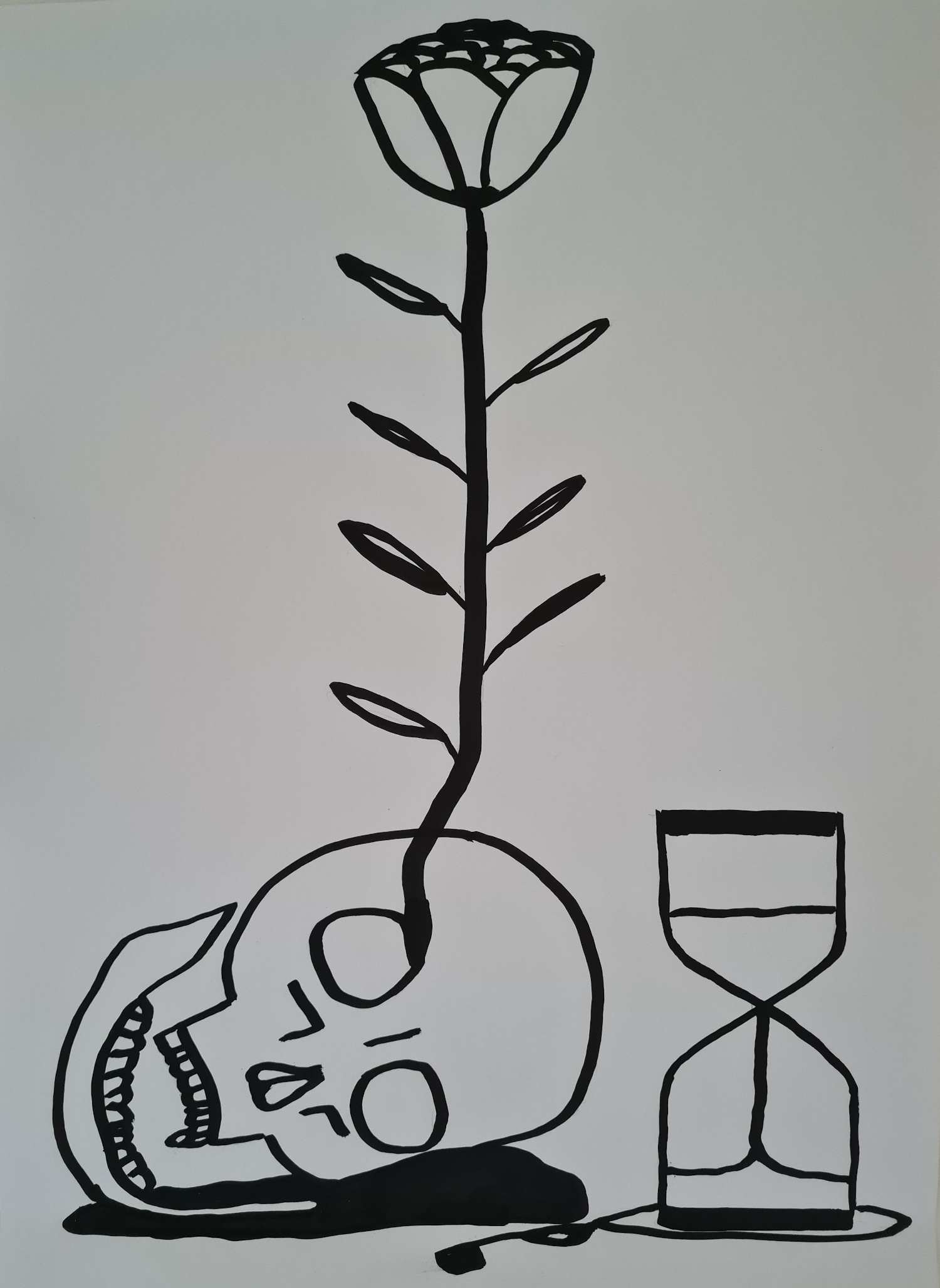
Symbolically this is often represented as a rose depicted near a skull and an hourglass, sometimes also with a candle nearby. The rose represents passion and infinite beauty, revealed in the seemingly countless layers of pebbles inside the thick, vibrant rosebud.
It is these symbols which are again and again portrayed in pictures categorized as Vanitas.

Personally I have also come up with my own Vanitas after meditating on the topic for a while (see below).
Death & Assumptions
I distinctly remember discussing the topic of death with my schoolmates when I was in my teens. The topic of death and generally “what will happen next” was bothering me in my life. Me as I think many kids were wondering “how life works” and what's probably going to happen. We were just starting to draw our own maps of our lives, and thereby also visited the topic of death.
It is my belief that even as adults we keep living by these mental maps of lives, continually updating them in the back of our minds(!). At the time we settled the discussion easily. The average life expectancy is 85 years in Germany. If none os us “screwed up”, i.e. had an accident, each of us was going to life until this age. This meant that death, the ultimate threat, became a remote remote event. We concluded that death after all was fine, since we all had most likely a long long time, except if we made a stupid mistake.
At this point we had made an assumption (we will all live 85 years), together with a conclusion (we can life safely) about death and life. We had postponed the issue of death.
Each day an estimated 150.000 people die all around the world. Most of them didn't see it coming. The truth is, that nobody knows when death is going to come. Tomorrow is not guaranteed. If every day is experienced fresh like that, in the face of death it becomes a true gift. Not just another event on a seemingly endless, predetermined sequence.
To assume that tomorrow is guaranteed is practical and soothing, but it is just an assumption, nothing more. If you would instead assume that today might be your last day, how would you behave differently?
My experience is that I get a sense of urgency, I get more excited. From a sleepy Sunday, it turns into a day of purpose and determination. Meditating on this question I found that the body is constantly min-maxing. If today was your last day, you would live much more intensely and alive than with the assumption that you have 60 more years, that today will more or less be a repetition of yesterday.
To me the consideration of death is not a trick, fooling the system to be more active, but it is a recognition of the truth, that we don't truly know when death will come. It is just that collectively we have hypnotized ourselves that we will live a long live. And if it doesn't happen it becomes a great tragedy.
When we drop the assumption of a long life, today becomes much more significant.
Closing Thoughts
Considering death to me has nothing to do with numbness or meaninglessness, but is tightly connected with the rose, i.e. the beauty of life. In the face of death, not only do seemingly big problems become smaller, but also every little aspect of life can be seen as beautiful, as it becomes infinitely precious, and less of a chore.
This of course can only be experienced after actually contemplating over it, and it hardly has any meaning when it is only intellectually comprehended through some text.
With this I'd like to end on Memento Mori and this joyous song from the Queens: